How to learn Dutch: a practical guide for expats
Many people in the Netherlands speak English, so it is easy to put off learning Dutch. But Dutch helps a lot: at work, with neighbours, at your child's school and with paperwork. Here is how to get started.
Your options
| Option | Good for |
|---|---|
| Language school | Structured courses per level, in a group or one-on-one. Often evening and intensive courses. |
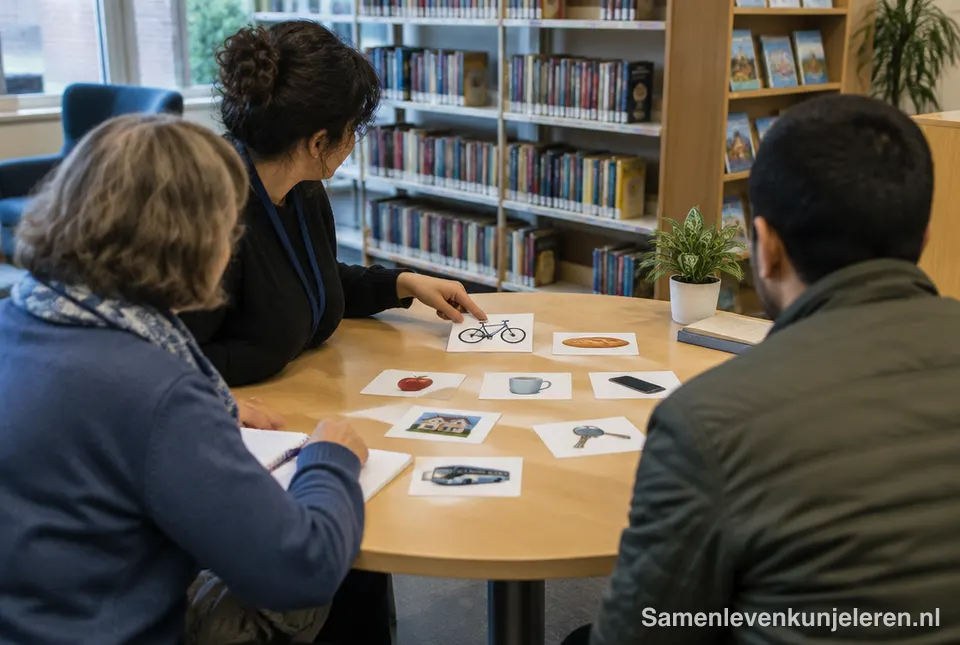
| Taalhuis (library) | Many public libraries have a "taalhuis" where you can practise, often free, with volunteers. |
| Integration course | If you must integrate (inburgeren), your municipality tells you which route and level apply to you. |
| Apps and online | Handy for words and listening. Best next to a course, not instead of one. |
| Conversation groups | Language cafés and buddy programmes to practise speaking. |
Dutch as a second language (NT2)
Courses for people who did not grow up with Dutch are called NT2 (Nederlands als tweede taal). When you search for a school, look for "NT2" or "Dutch for expats".
Tips to learn faster
- Ask people to speak Dutch with you. Many Dutch people switch to English to be helpful. Tell them you are learning.
- Practise a little every day. Fifteen minutes a day works better than three hours once a week.
- Watch Dutch TV with Dutch subtitles. You hear and read the words at the same time.
- Read simple news. Some news sites publish in easy Dutch.
- Join something local. A sports club, choir or volunteer work gives you real conversations.
Find a Dutch course near you
We list language schools that teach Dutch in cities all over the Netherlands, such as Amsterdam, Rotterdam, The Hague and Utrecht. See all cities.